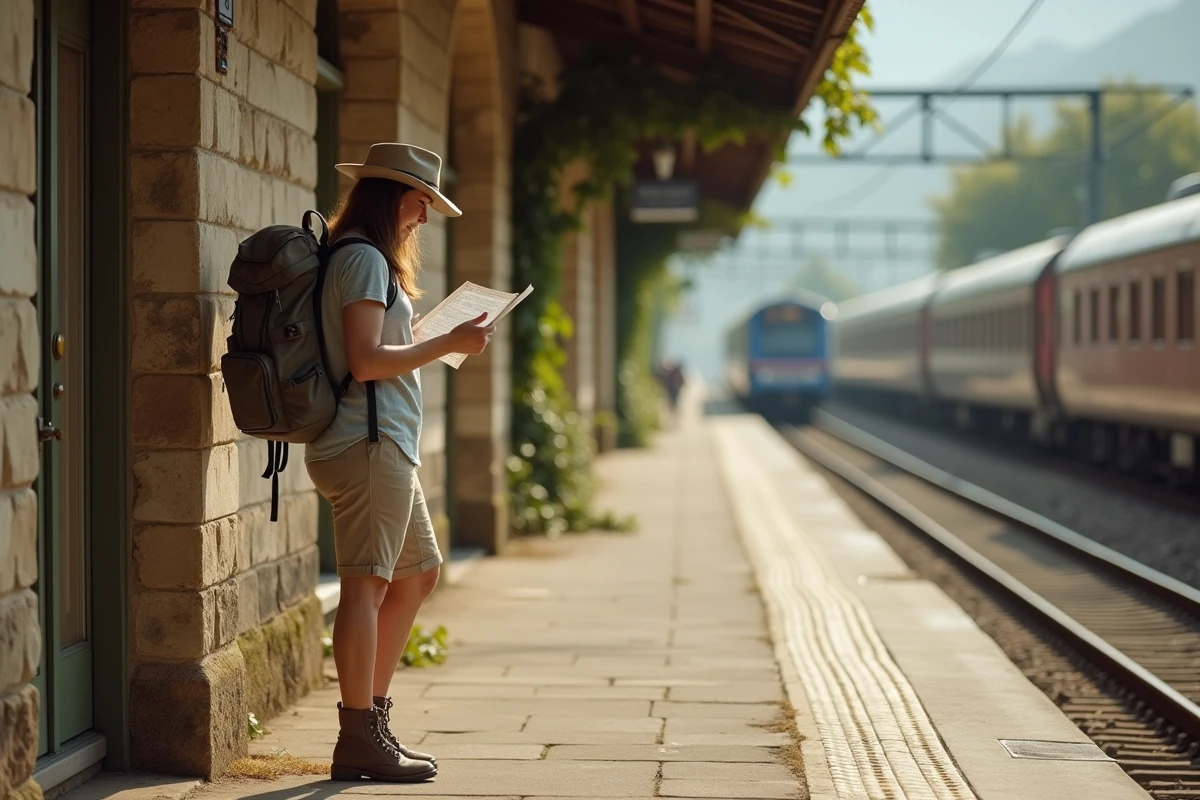
When planning a trip from Paris to Marseille and the comparator displays CO₂ emissions next to the price, the instinct changes. We no longer just look for the cheapest flight; we compare it with the night train or carpooling. This shift, visible since Google Flights and other platforms have integrated carbon footprints per trip, transforms the way we plan a journey even before packing our suitcase.
Carbon footprint displayed at booking: what it concretely changes
Since 2023, several online comparators display estimated CO₂ emissions per trip directly in the search results. Travelers see, in black and white, that a domestic flight emits several times more than an equivalent train journey. It is no longer an abstract argument; it is a data point integrated into the purchasing process.
In France, this transparency is accompanied by a concrete regulatory measure: the ban on certain domestic flights when a train alternative of less than 2 hours and 30 minutes exists, validated by the European Commission. We move from a moral incentive to a legal constraint. To organize a responsible trip, resources compile alternative routes and field feedback, such as https://alternative-travel.net/, which gathers practical tips for adapting one’s travels.
This framework encourages rethinking the itinerary from the start. Instead of reflexively booking a round-trip flight, we break the journey into mixed segments: daytime train, local bus, sometimes boat. The trip becomes part of the journey, not just a simple transfer.
Night trains and revived routes in Europe: itineraries to try
The revival of night trains in Austria, France, and Sweden has created a network that had not existed for a decade. European rail companies are noticing a significant increase in ridership on these lines, driven by travelers looking to replace flying without losing a day of vacation.
On the ground, the operation remains simple. You board in the evening, sleep in a sleeper, and arrive in the morning in a new city. No security lines, no airport transfers. The actual travel time, door to door, often rivals that of a short-haul flight once you add up the checks and waiting times.
Some game-changing routes
- Nightjet (Austria) connects Vienna to Paris, Brussels, or Amsterdam, with modern sleeper cars and bike transport service on board
- The revived French lines serve destinations like Nice or the Pyrenees, providing direct access to car-free nature areas
- In Sweden, night trains to Lapland have seen demand explode, driven by the movement to reduce domestic flights
Feedback varies on comfort depending on the companies, but the principle remains the same: you gain a night in a hotel and significantly reduce your carbon footprint compared to flying.
Traveling by bike or local transport: slowing down to better see a country
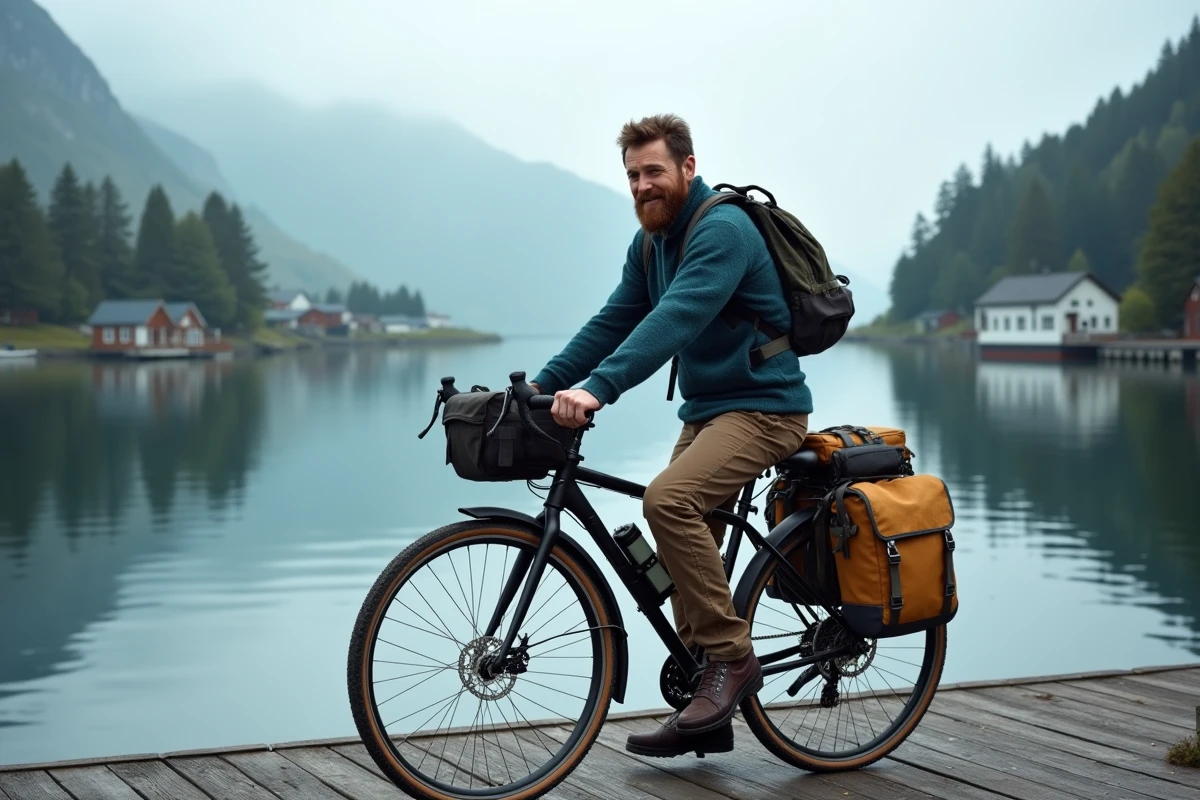
Travel biking is no longer reserved for athletes. Marked routes cross France, the Netherlands, and Portugal, with suitable accommodations every 40 to 60 kilometers. You carry your panniers, stop in villages, and eat with locals. The pace imposes an immersion that flying or renting a car does not allow.
Taking the local bus in a foreign country produces the same slowing effect. In Morocco, Peru, or Southeast Asia, intercity bus networks cover areas that conventional tourism ignores. You share the space with local populations and discover stops that are not listed in any guide.
This approach requires a bit more preparation. You need to check schedules (often approximate), accept the unexpected, and allow some leeway in your planning. In return, transportation costs drop, and the experience gains authenticity.
Staying with locals and volunteering: two levers to support the local economy
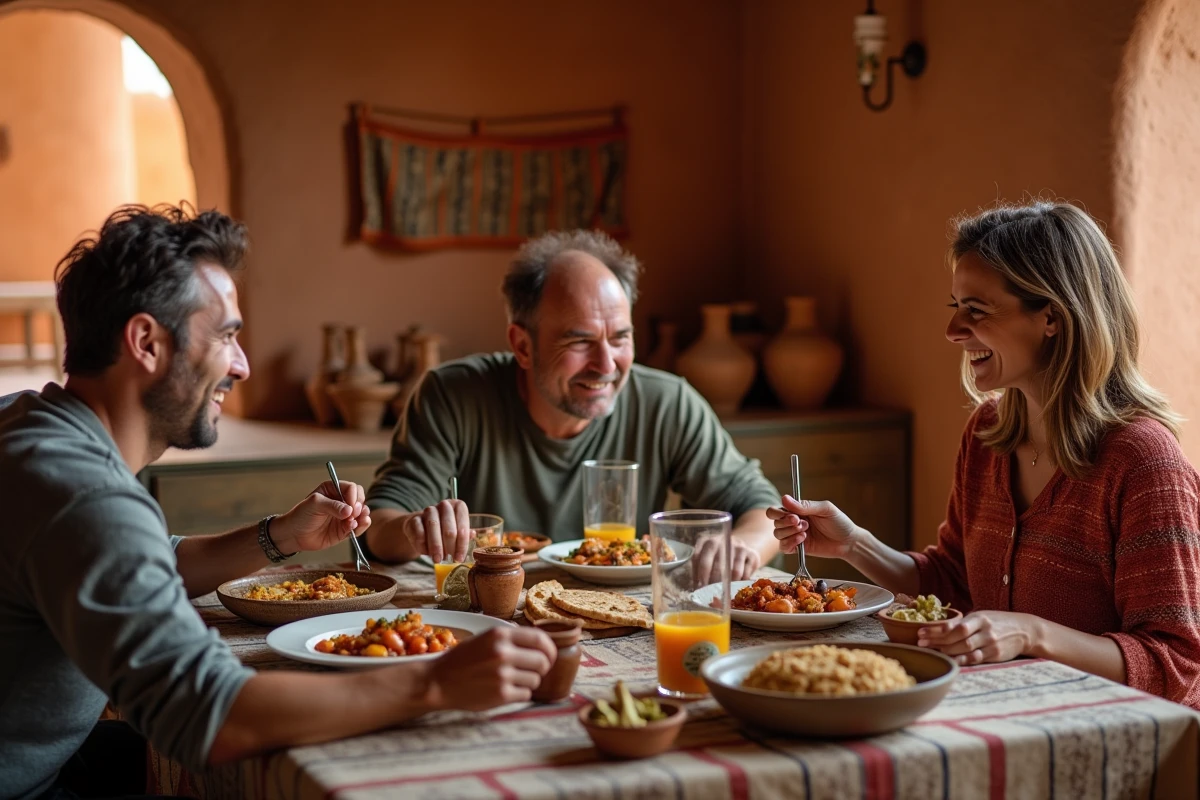
Staying with locals, whether through connection platforms or direct contact, redistributes travel money to local families rather than hotel chains. In rural areas around the world, this form of hospitality sometimes represents the main source of income related to tourism.
Volunteering in exchange for accommodation (agricultural work, renovation assistance, teaching) adds a concrete dimension to the stay. You do not just visit a place; you participate in it. Platforms that organize these exchanges connect hosts and travelers for specific missions, with durations ranging from a few days to several weeks.
What to check before committing
- The transparency of the project: a serious volunteering opportunity clearly describes the tasks, accommodation conditions, and expected hours
- The real impact on the community: prioritize structures where the work directly benefits residents, not a commercial intermediary
- Reviews from former participants, which help identify reliable projects and avoid scams disguised as solidarity tourism
This type of travel changes the traveler’s posture. You move from being a consumer of experiences to a temporary actor in a place, with all that implies in terms of adaptation and respect for local customs.
Nature tourism and off-the-beaten-path destinations
Natural parks, little-visited islands, and remote valleys attract a growing share of travelers fleeing saturated destinations. Adventure is not measured in kilometers traveled but in the quality of contact with a territory and its inhabitants.
In France, mountain ranges like the Jura, the Cévennes, or the Cantal offer remarkable landscapes without the overcrowding of the most famous Alpine spots. Abroad, countries like Georgia, Albania, or Bolivia offer nature and culture experiences at costs much lower than classic destinations.
Traveling differently, in essence, is less about the destination than about the method. Choosing the train over the plane when possible, staying with locals instead of in resorts, taking the time to cross a country instead of hopping from one city to another—these are choices that reduce the travel footprint while increasing what you gain from it.