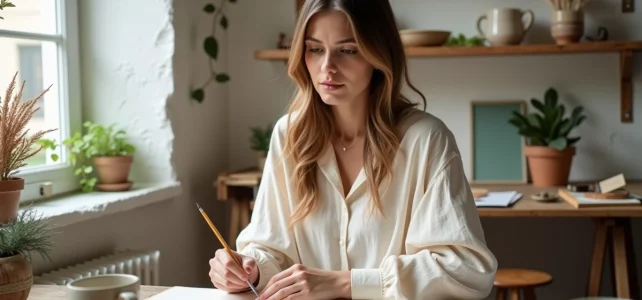
Feminine creativity in daily life is not limited to a one-off artistic activity. It refers to a set of sensory and expressive micro-practices, integrated into everyday gestures, that nourish both mental well-being and the ability to generate new ideas.
According to a study by Huta and Rudd published in the Journal of Positive Psychology in 2022, micro-moments of well-being enhance divergent creativity, meaning the ability to produce varied ideas rather than simply increasing productivity.
Related reading : Essential Tips for Safe and Peaceful Navigation on vatrab.com
Divergent creativity and sensory rituals: the mechanism to understand
Before seeking ideas for activities, it is essential to understand why certain gentle gestures stimulate the imagination. Divergent creativity works through free associations: the brain connects distant concepts to create something new. Slow activities (contemplative journaling, coloring, manipulating textures) reduce mental noise and allow these connections to form.
This creative process stands in contrast to performance logic. Knitting without a pattern, writing in a notebook without a goal, mixing colors on a blank page: these practices do not need to result in a showable outcome. Their value lies in the slowing down itself.
Further reading : Tips and practical ideas for a more pleasant home every day
Online resources like mademoisellecamille.fr precisely gather this type of inspiration focused on the sweetness of life, fashion, and creative ideas for women, offering content that supports the need to slow down without guilt.
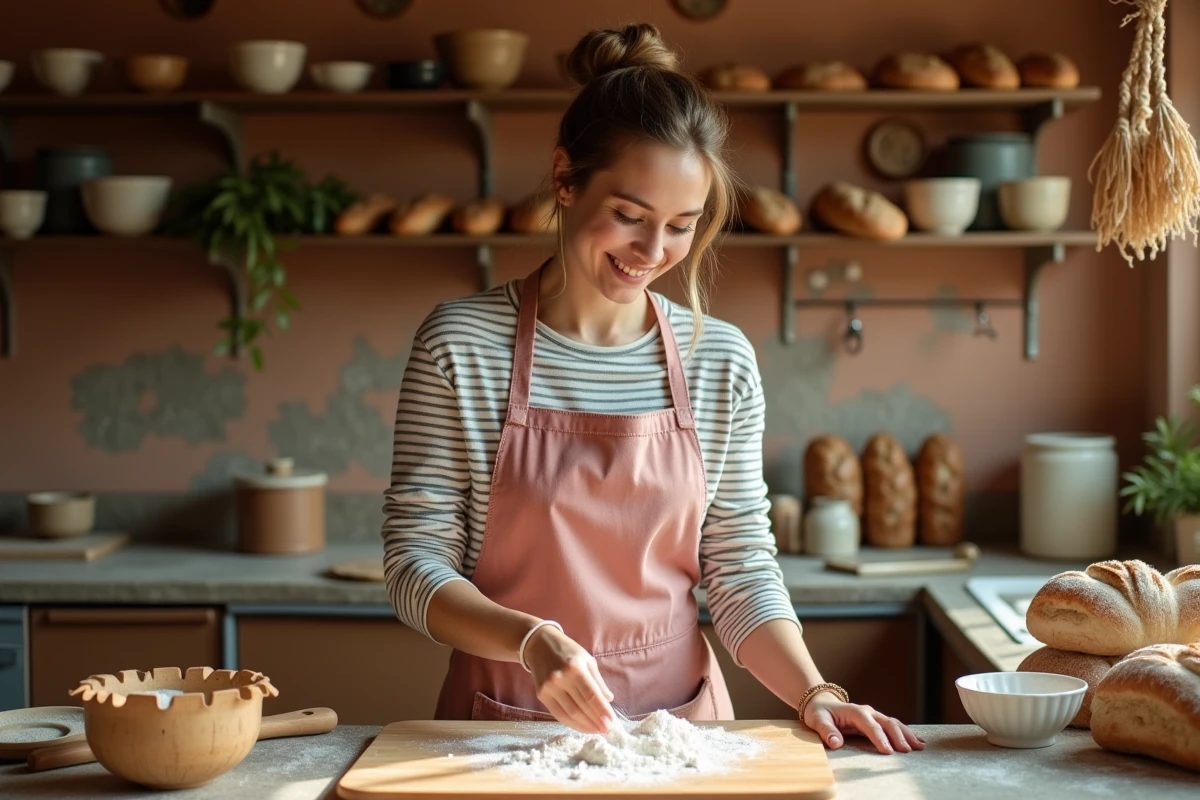
Creative journaling: a feminine practice in full structuring
The creative journal combines free writing, collage, drawing, and sometimes watercolor in the same notebook. It is neither a classic diary nor an organizational bullet journal. The goal is expressive: to put on the page what clutters the mind, in a form that mixes words and images.
In France, workshops on slow crafting and feminine creativity are now being structured within social centers. Some local authorities integrate them into programs for preventing maternal burnout and postpartum isolation.
Choosing your notebook and tools
The medium matters more than one might think. A notebook with sufficiently dense paper prevents ink from bleeding through the pages, which often discourages beginners. Blank or dotted pages are better than lined ones, as they allow the freedom to draw, paste, or write diagonally.
- A rigid cover A5 notebook, easy to carry in a bag, remains the most versatile format for regular practice
- Watercolor markers or soft colored pencils allow for playing with shades without bulky materials
- A glue stick and a few magazine cutouts are enough to introduce collage into your pages
Female cycle and creative variations: adapting your practice
Research published in the Creativity Research Journal in 2023 by Kassam and colleagues documents variations in creativity throughout the menstrual cycle. Some women report more ideas and creative risk-taking during the follicular phase, while the luteal phase may favor more introspective creativity: writing, collage, journaling.
This finding opens up a practical avenue often overlooked. Instead of forcing the same activity all week, adapting the type of creative practice to the cycle phase can reduce frustration and increase enjoyment.
Two creative modes to alternate
The first mode, expansive, is suitable for high-energy periods: testing a new artistic technique, starting a sewing project, experimenting with an unusual color mix. Creative boldness works better when the body supports it.
The second mode, contemplative, aligns with natural retreat phases: rereading your journal, reorganizing an inspiration notebook, drawing repetitive patterns. These gestures require little energy but maintain the connection with creative practice without the pressure of results.
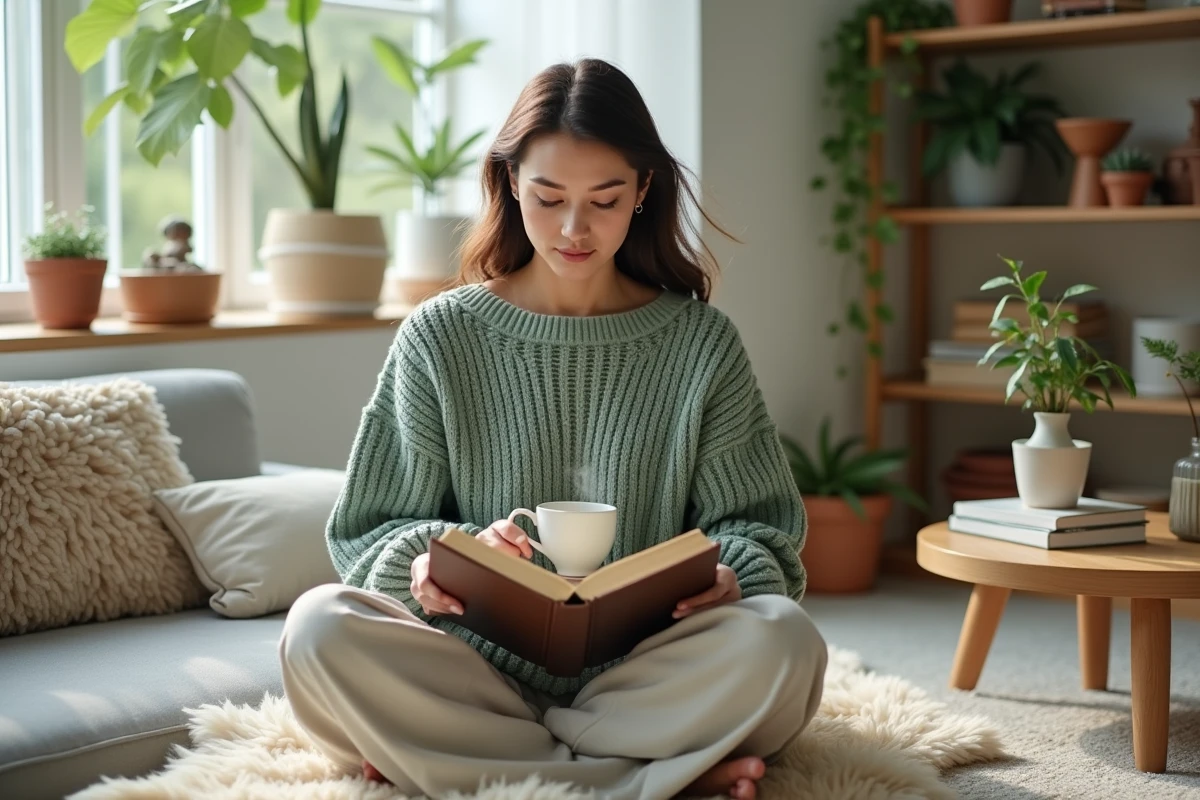
Integrating creative softness into a busy schedule
Mental overload is the primary barrier to feminine creativity in daily life. The study by Huta and Rudd confirms that small regular positive experiences outweigh occasional long sessions in terms of impact on creative thinking.
Specifically, five to ten minutes daily are worth more than a three-hour workshop once a month. Regularity builds a reflex, not a constraint.
- In the morning, before checking a screen, write three lines in a notebook about what comes to mind, even without coherence
- During a lunch break, browse an art book or an inspiration blog to nourish the gaze effortlessly
- In the evening, dedicate a few minutes to a simple manual gesture (embroidery, sketching, layout of a notebook) as a transition between an active day and rest
These rituals require neither talent nor expensive materials. They only require a decision: to protect a short time slot rather than waiting for the perfect moment, which almost never comes.
Creative softness is not a luxury reserved for those with free time. It is a tool for emotional regulation whose benefits on mental health are beginning to be documented by research. Associating it with simple gestures, adapted to one’s current energy, is enough to change the texture of daily life.