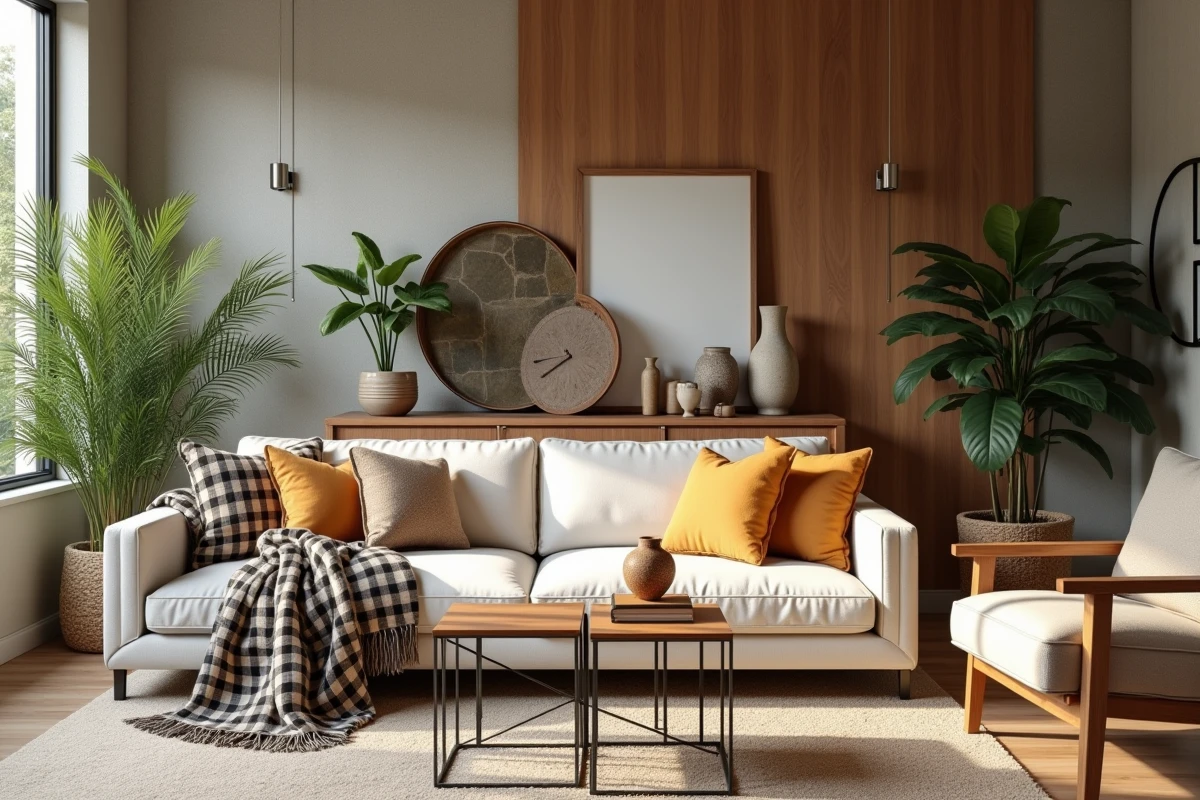
Transforming an interior doesn’t always require major renovations. A few targeted choices regarding materials, colors, or furniture arrangement are often enough to radically change the atmosphere of a room. Here are ten concrete ideas for interior decoration to give new life to your space, with options applicable regardless of your budget.
1. Natural stone accent wall to structure the living room
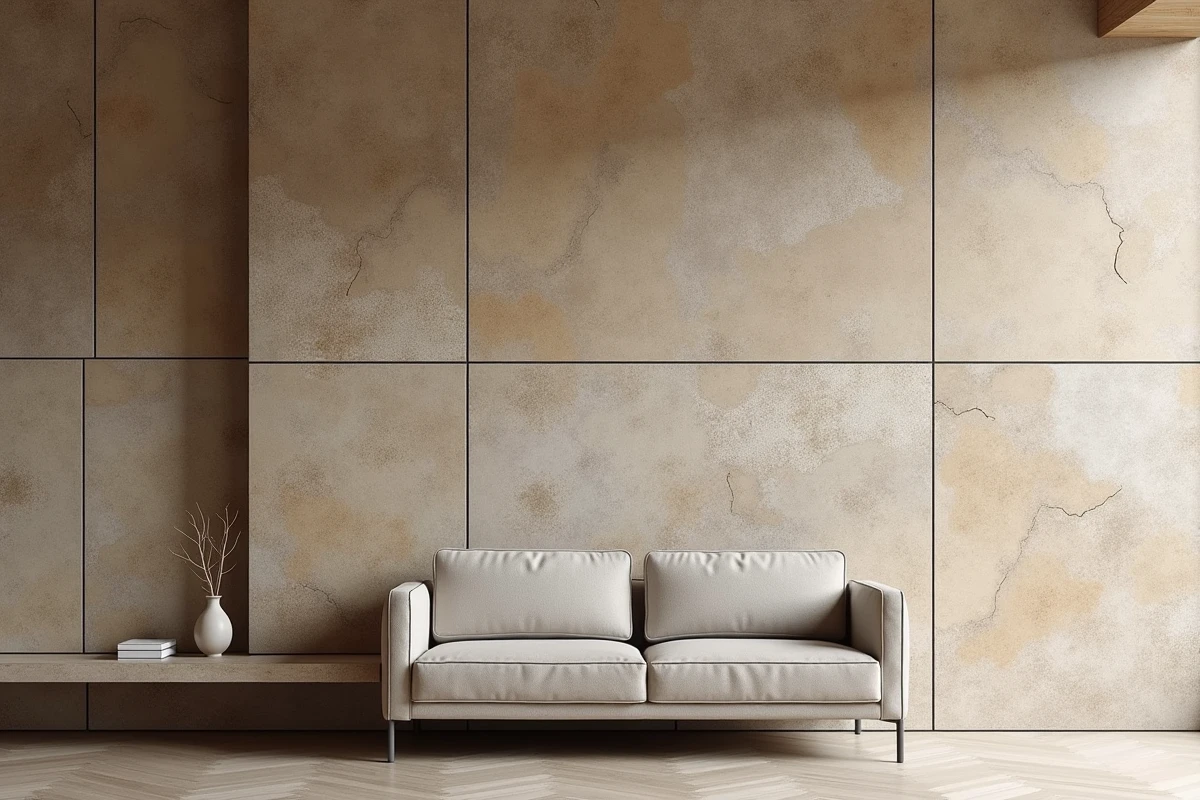
Have you ever noticed that a single wall treated differently changes the perception of an entire room? That’s the principle of the accent wall. Instead of painting all four walls, focus your effort on just one, dressed in natural stone or sandstone cladding.
An accent wall draws the eye and adds depth without overcrowding the space. Place it behind the sofa or facing the entrance of the living room for an immediate effect. Sandy or light gray tones work well with wooden furniture.
To explore other ideas and find suitable accessories, you can browse the selections of interior decoration with D Kom Déco to complete your project.
2. Repositionable wallpaper to change decor without commitment
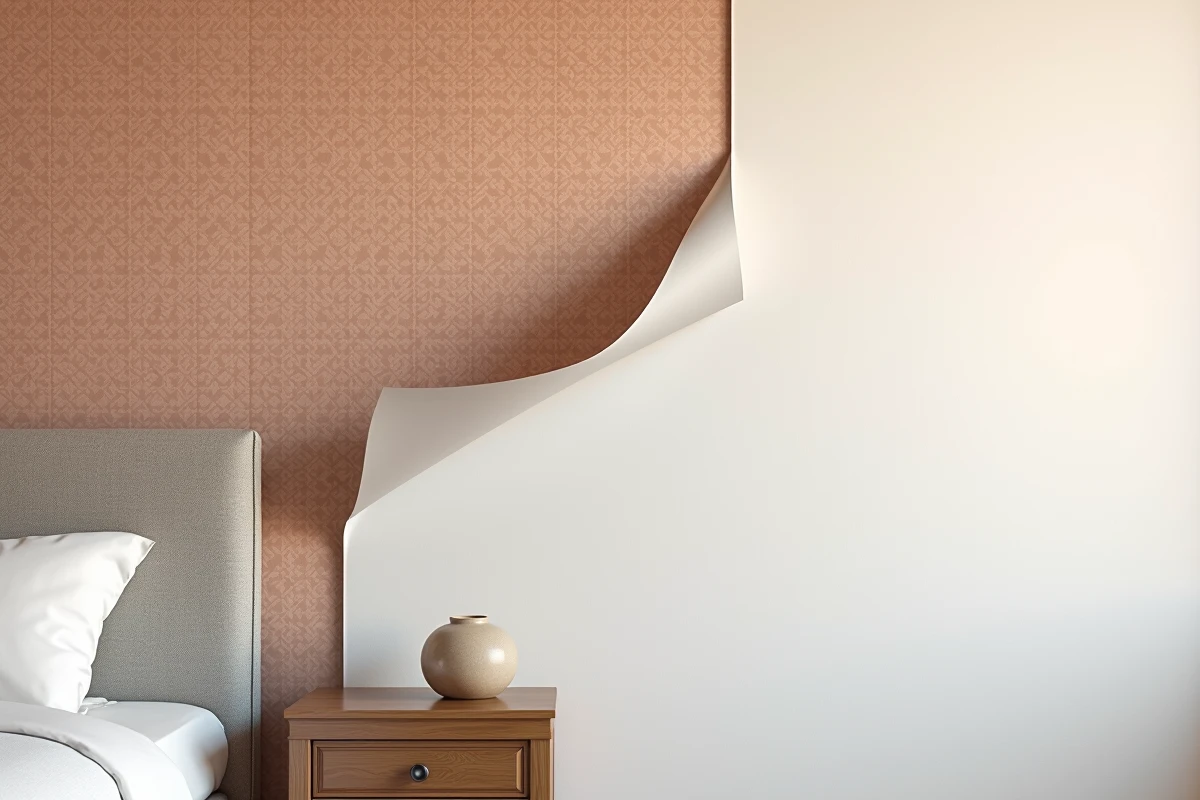
Renters are well aware of the problem: personalizing a wall without leaving traces. Repositionable wallpaper meets this need. It sticks and peels off without residue, allowing you to test a bold pattern without risk.
Geometric patterns, botanical prints, faux brick effects: the choice has significantly expanded in recent years. It’s a perfect reversible solution for rented spaces. Apply it to a wall in the bedroom or entryway for a visible result in just a few hours.
3. Indirect LED lighting to sculpt the ambiance
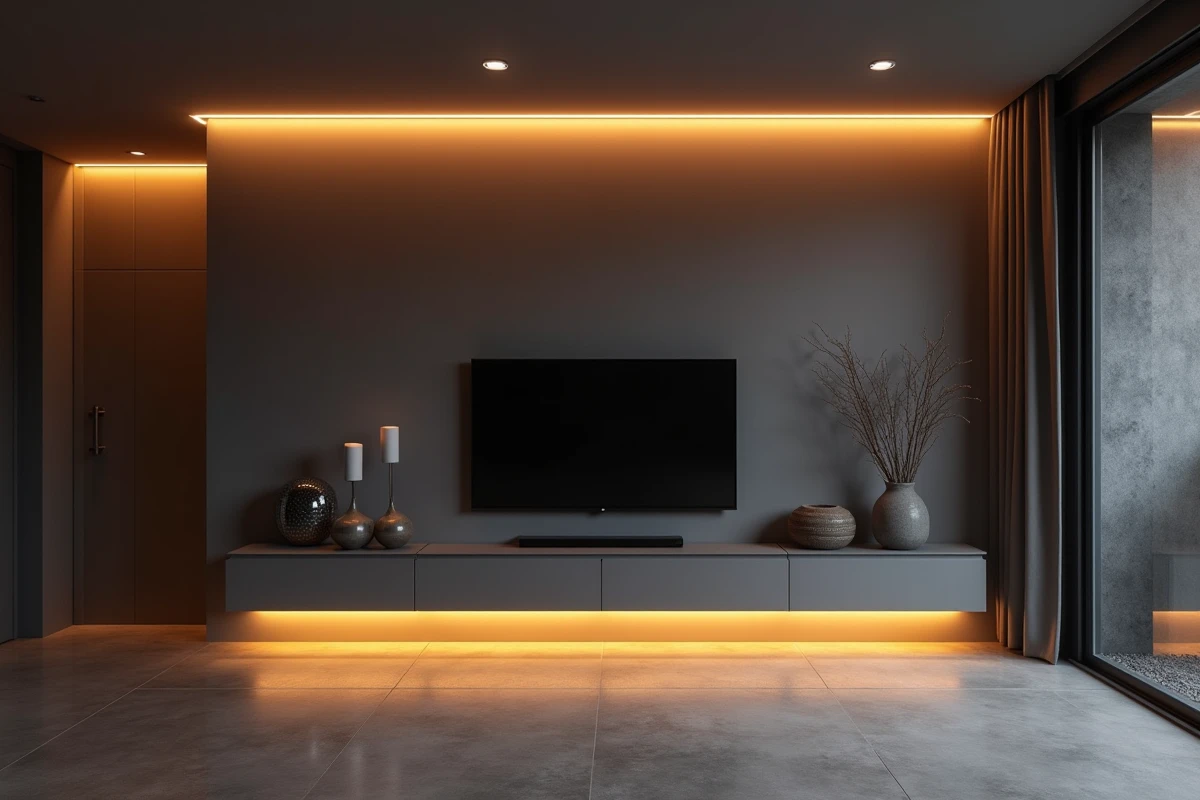
A central ceiling light illuminates but doesn’t create ambiance. Indirect lighting, on the other hand, shapes volumes. LED strips placed under a shelf, behind a TV unit, or along a headboard change the perception of the room in just a few minutes.
Opt for a warm color temperature (around 2700 K) for the living room and bedroom. Indirect light eliminates harsh shadows and visually enlarges the space. Paired with a dimmer, it allows you to switch from functional light to a soft atmosphere.
4. Wood and black metal mix for controlled contrast
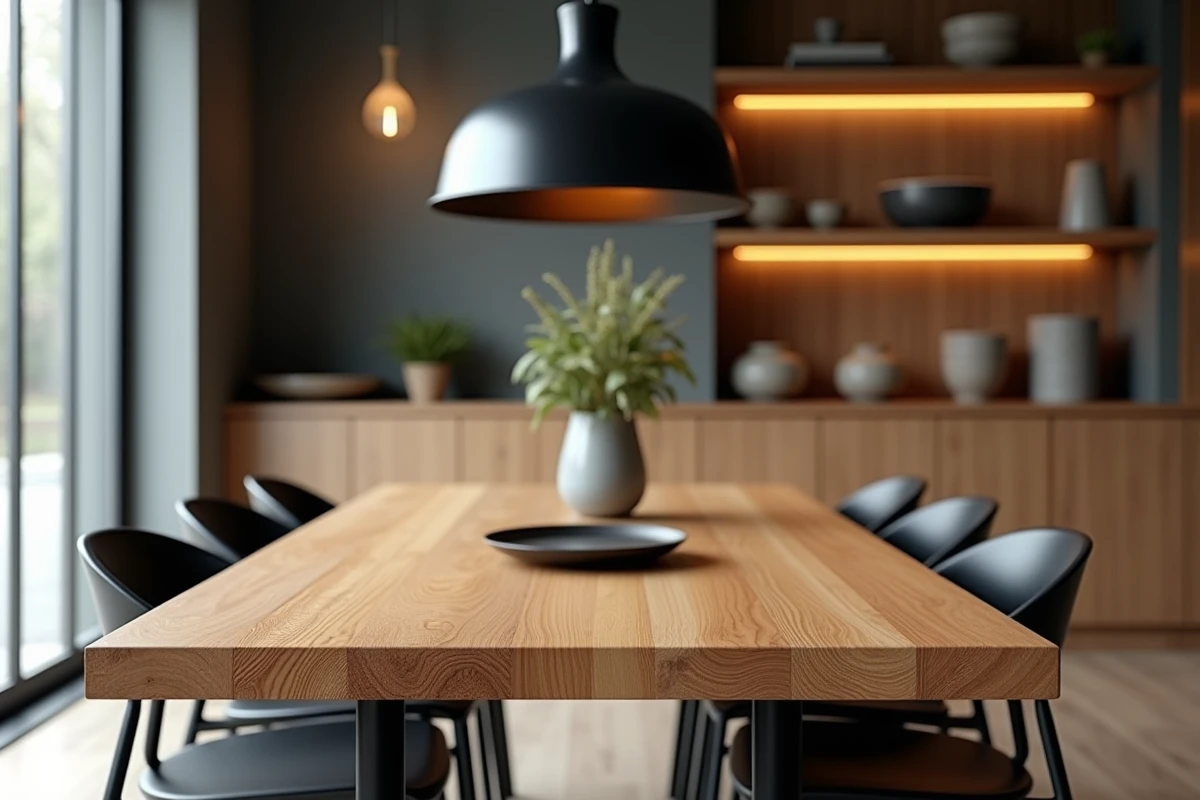
Wood brings warmth, while black metal adds structure. Combining the two in the same piece of furniture (shelf, coffee table, entry console) creates a contrast that is both raw and elegant, inspired by industrial style but without the coldness.
This duo works in almost every room. In the living room, a wood-metal wall shelf displays books and decorative items. In the kitchen, high stools with black legs and oak seats define a characterful dining area.
5. Cushions and throws in varied textures to dress a sofa
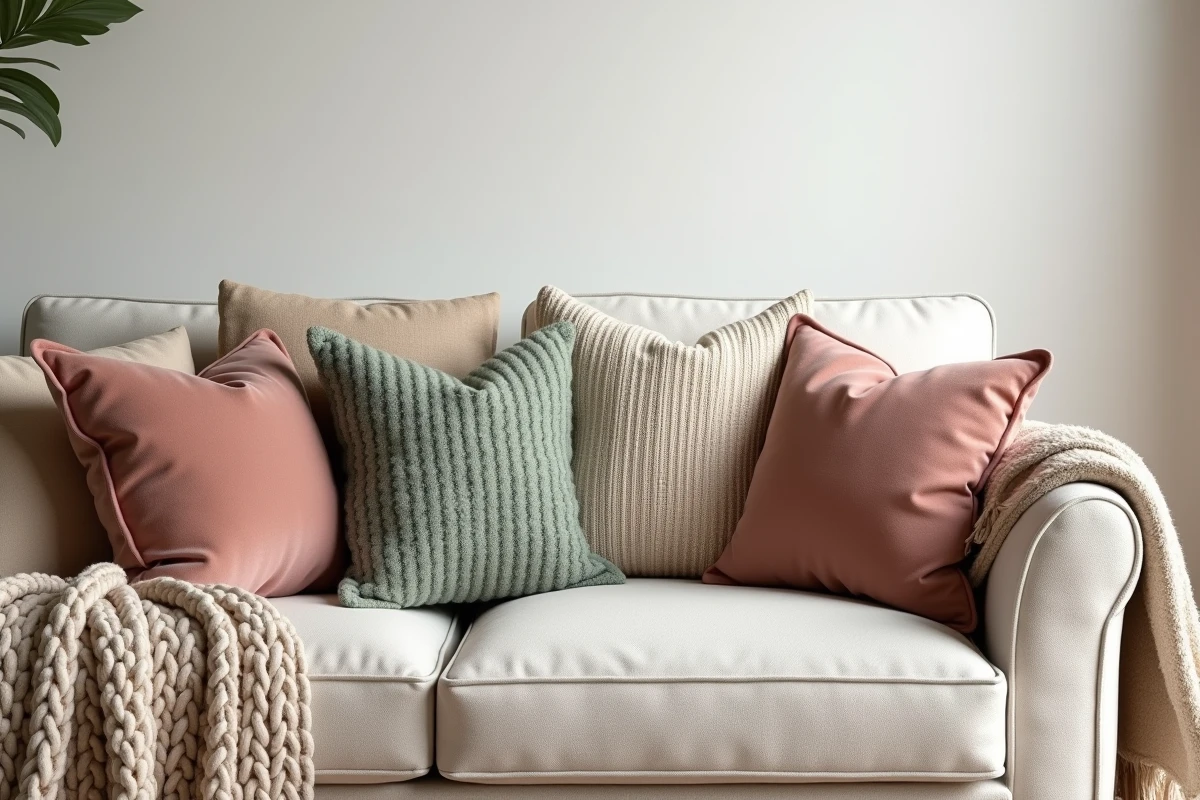
Changing the textiles on a sofa is probably the least expensive and most effective modification. The idea is to layer different textures rather than colors. A raw linen cushion, another in corduroy, a throw in boucle wool.
This play of materials adds visual depth and an immediate sense of comfort. Three to four cushions are sufficient on a standard sofa. Beyond that, the seating becomes cluttered.
6. XXL mirror placed on the floor to enlarge a narrow room
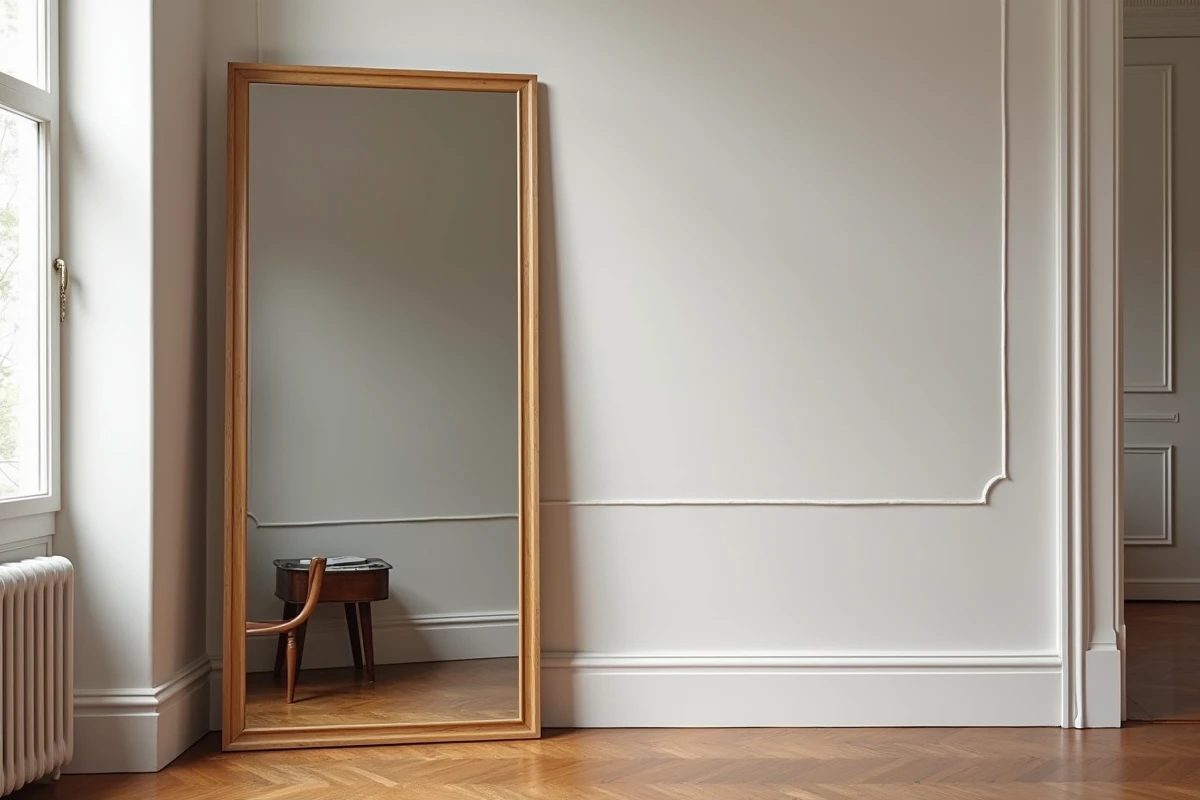
A large mirror leaning against a wall, without even being fixed, changes the perception of a hallway or entryway. It reflects natural light and visually doubles the depth of the room.
Choose a thin frame in light wood or brushed gold depending on the desired ambiance. An XXL mirror works well in both a living room and an attic bedroom. Positioned facing a window, it captures maximum light.
7. Rare indoor plants as decorative pieces in their own right
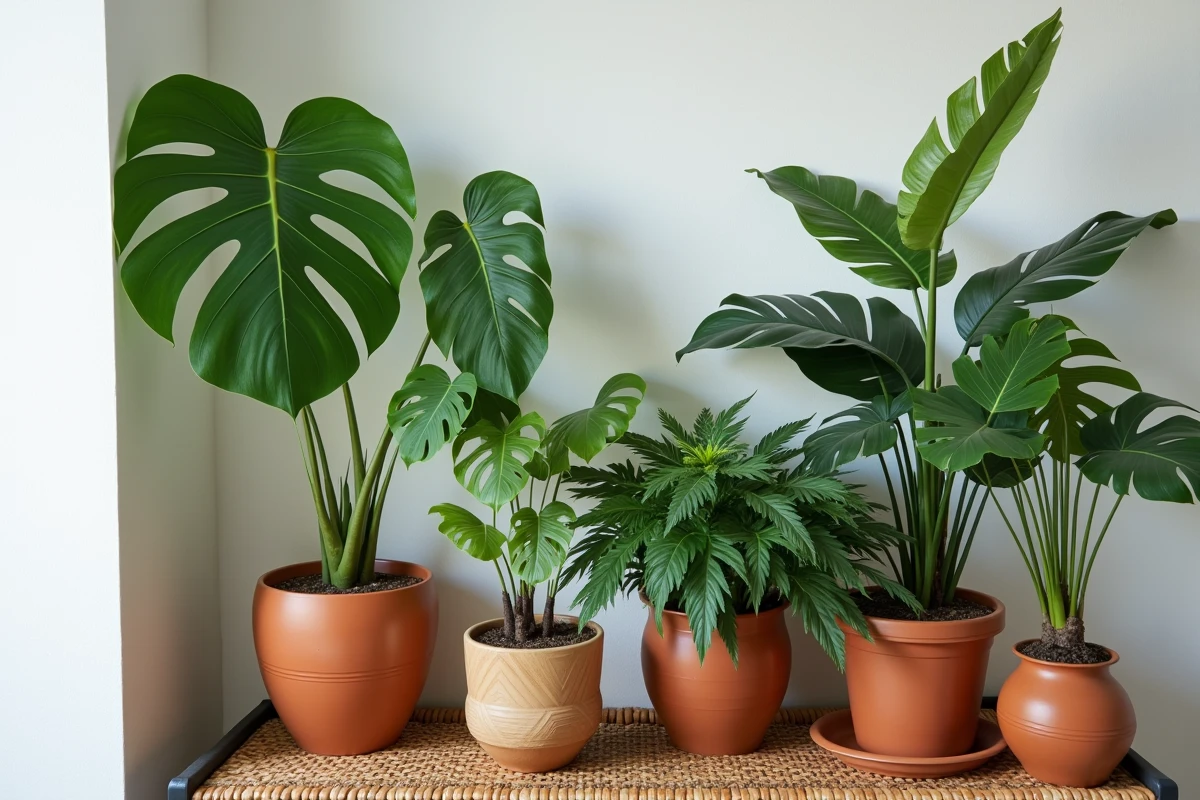
Classic green plants remain a staple, but the trend is leaning towards less common species. Le Figaro recently noted the enthusiasm for rare indoor plants, which are becoming true decorative objects.
A variegated Philodendron or an Anthurium clarinervium placed on a ceramic pedestal transforms an empty corner into a focal point. Group two or three plants of different heights to create a small indoor garden.
8. Palette of muted greens and warm neutrals for the walls
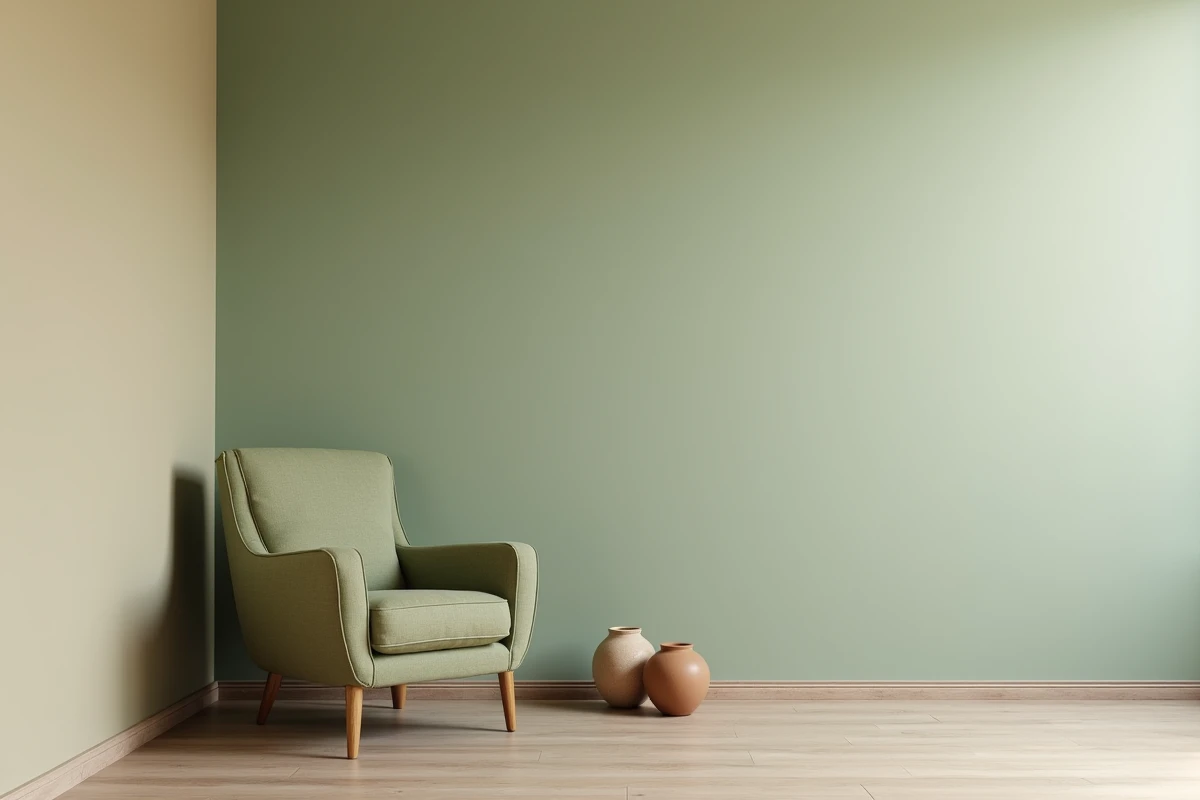
The trendy colors for transforming an interior revolve around muted sage green, soft terracotta, and creamy whites. These shades work together without competing.
Painting a single wall in muted green is enough to anchor the room. The rest of the walls, in off-white or beige, allow the overall space to breathe. For furniture and decorative items:
- Natural linen or sandy beige sofa for a neutral base
- Terracotta ceramic vases to echo the warmth of the floor
- Raw wood or brushed brass frames for adjacent walls
9. Thrifted second-hand objects for a unique decoration
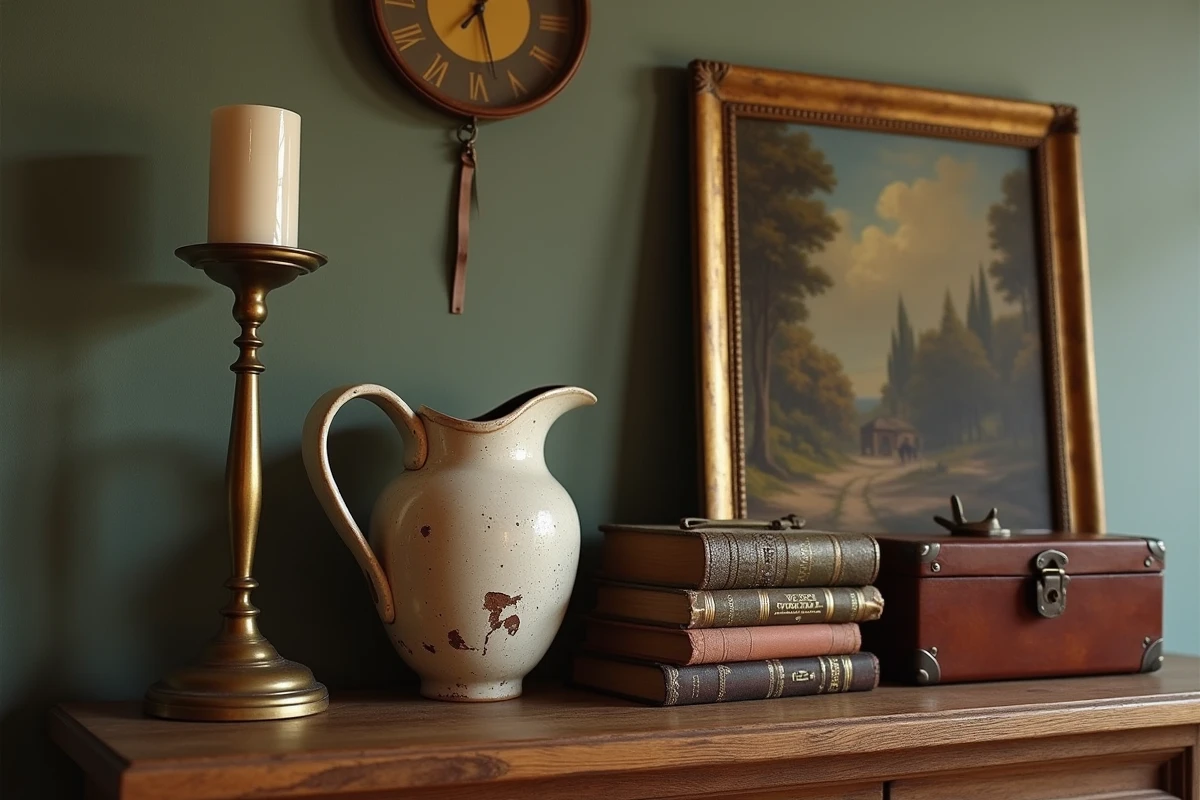
The second-hand decoration market is experiencing significant growth. Finding a blown glass vase, a solid wood stool, or a 1970s lamp gives your interior a personality that no catalog can replicate.
A thrifted object tells a story and breaks the uniformity of a new interior. Flea markets, recycling centers, online platforms: the sources are plentiful. Mix one or two vintage pieces with contemporary furniture to avoid a museum effect.
10. 3D visualization by AI before diving in
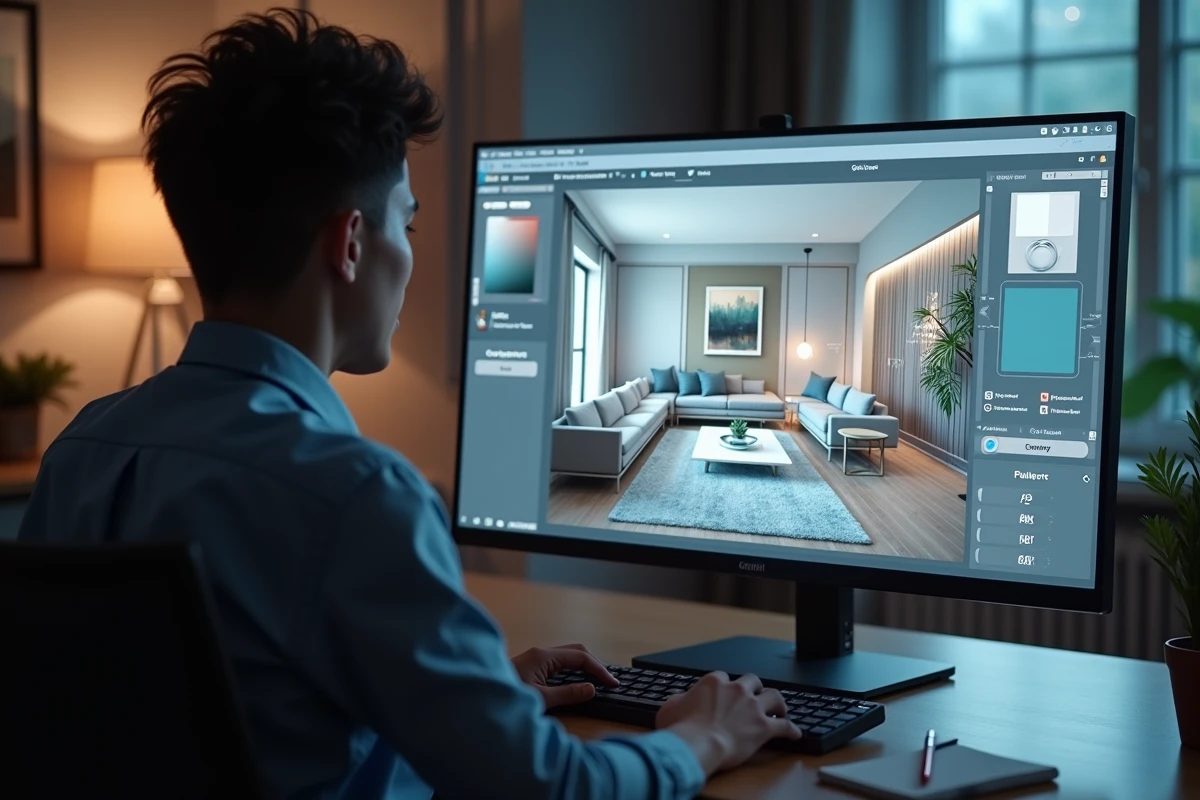
Before ordering a sofa or choosing a paint color, testing the rendering on screen can prevent many mistakes. AI-powered 3D visualization tools allow you to project an entire room with the colors, furniture, and materials being considered.
Some applications offer the ability to photograph your living room and apply different styles in just a few seconds. This process, which has recently become more accessible, changes the way decorating decisions are made:
- Test several color palettes on your own walls before buying paint
- Check the proportions of a piece of furniture in your actual space
- Compare material combinations (wood-metal, linen-velvet) without moving a single object
Interior decoration often hinges on well-chosen details rather than a complete overhaul. An accent wall, a play of textures on the sofa, a well-placed mirror, or a carefully thrifted object are enough to transform the atmosphere of a room. The most useful approach is to start with a single change, observe the effect produced, and then gradually adjust.