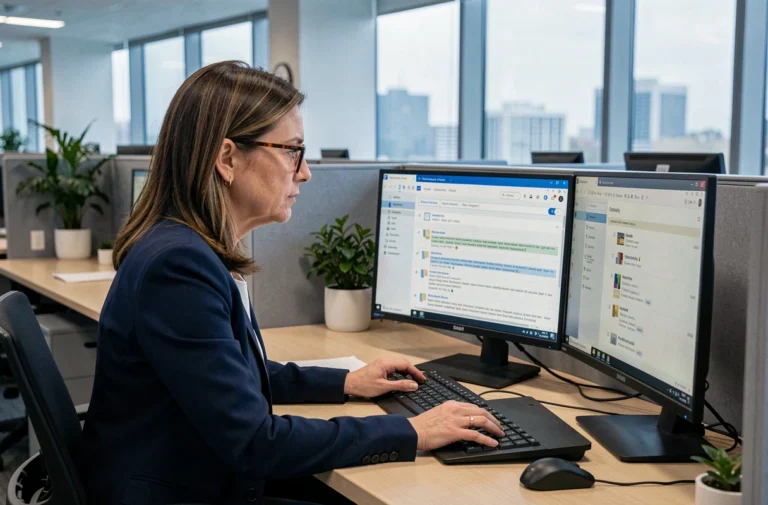
Traditional libraries are evolving with the digital age, now offering online platforms for sharing e-books. This transformation allows readers to access a vast collection of works without leaving their homes. Users can borrow, read, and even exchange e-books with remarkable ease.
This new model of online library promotes access to knowledge and culture, especially in areas where access to physical books is limited. It encourages a community of readers to form and share their literary discoveries, thus redefining the concept of a library.
The advantages and challenges of sharing e-books
The sharing of e-books offered by libraries provides numerous advantages. Accessibility is enhanced: readers can borrow works from anywhere, at any time, without geographical constraints. This ease of access is particularly beneficial for people living in rural areas or far from major cities.
- Unlimited access: digital collections do not suffer from physical limitations, allowing for increased availability of titles.
- Ecology: the reduction of carbon footprint related to the production and transport of paper books.
- Cost savings: printing and distribution costs are eliminated, allowing libraries to diversify their offerings at a lower cost.
This model is not without challenges. Respect for copyright and the management of licenses for e-books pose complex issues. Libraries must navigate between the demands of publishers and the expectations of readers, which can limit the quantity and variety of available works.
The issue of digital lending raises technical challenges: format compatibility (such as ePub) and the usability of reading platforms are crucial for providing a satisfactory user experience. The site fourtoutici, for example, offers an intuitive interface, but other platforms still need to adapt to meet readers’ needs.
Establishing these digital libraries requires considerable resources in terms of technology and staff training. Libraries must invest in robust infrastructures and ensure that their teams are trained in new methods of managing digital collections.
| Advantages | Challenges |
|---|---|
| Increased accessibility | Copyright |
| Ecology | Format compatibility |
| Cost savings | Technological resources |

Online library platforms and initiatives
The Departmental Media Library of Isère, located in Saint-Martin-d’Hères and Bourgoin-Jallieu, is among the pioneers of this digital transition. By offering access to a vast collection of digital resources, it allows users to consult a variety of works, ranging from classics in the public domain to the latest publications.
The municipal libraries of Grenoble have also embraced the digital shift. They offer an e-book lending service, facilitating access to reading for residents. This model of digital library is part of a broader effort to modernize and democratize culture.
The initiatives such as those of the Departmental Media Library of Isère and the municipal libraries of Grenoble demonstrate that it is possible to reconcile tradition and innovation. Thierry Claerr, head of the book and reading service at the Ministry of Culture, emphasizes the importance of these projects for the future of libraries. ‘We must make knowledge accessible to all, and digital is a promising avenue,’ he asserts.
Isabelle Westeel, director of the municipal libraries of Grenoble, highlights the benefits of this transition: ‘The shift to digital allows us to reach a broader audience, particularly younger generations, while maintaining our mission of preserving heritage.’
| Institutions | Location | Initiatives |
|---|---|---|
| Departmental Media Library of Isère | Saint-Martin-d’Hères, Bourgoin-Jallieu | Access to a vast collection of digital resources |
| Municipal Libraries of Grenoble | Grenoble | E-book lending |
These examples show that libraries, by adapting to new technologies, can continue to play a key role in the dissemination of knowledge and culture. Consider these initiatives as models for the future of online libraries.