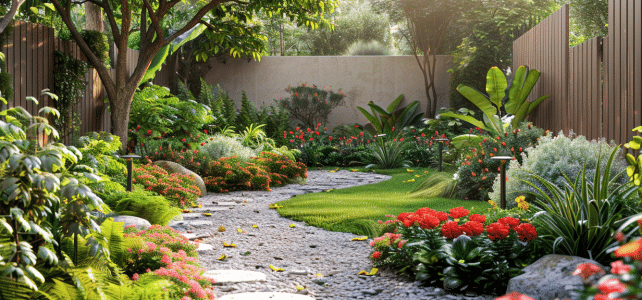
Creating a harmonious and functional outdoor space requires considering several key factors. An effective irrigation system is vital for maintaining plant health and the beauty of the landscape. The choice of materials, whether stone, wood, or metal, defines the aesthetics and durability of the layout. A regular maintenance plan ensures that the garden remains a haven of peace and beauty throughout the year. The balance between these elements is essential for transforming an outdoor space into an attractive and welcoming garden.
The Fundamentals of Irrigation for a Healthy Garden
A proper irrigation system is the backbone of a healthy garden. Consider the different areas of your garden: the vegetable patch, the orchard, the greenhouse, each with its specific water requirements. The vegetable patch, with its variety of fruits, vegetables, and herbs, requires special attention to adjust moisture for each crop. The orchard and its fruit trees demand substantial watering to ensure good growth and abundant fruiting, while the greenhouse, a controlled environment, requires a finely tuned irrigation system to match a specific microclimate.
The use of a rainwater collector is part of an eco-friendly and economical approach. This device captures the natural water flow, thereby reducing dependence on drinking water for irrigation. In addition to its ecological benefits, it allows for significant savings on the water bill. Rainwater, soft and free of chlorine, is also beneficial for plant health, especially for those sensitive to hard water.
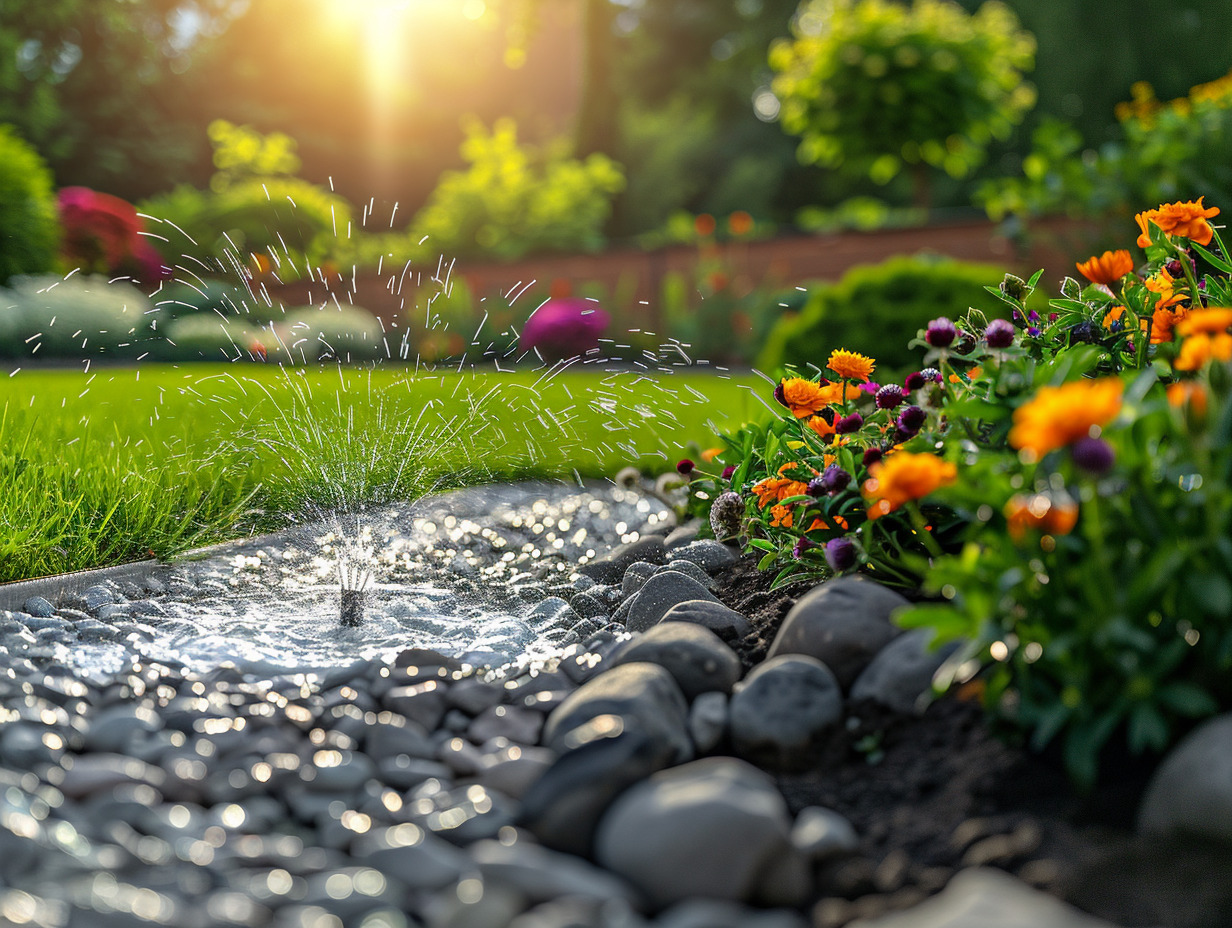
The choice of irrigation type is crucial. Drip irrigation stands out for its efficiency and ability to minimize water waste. It provides direct hydration at the root level, thus promoting better water absorption by the plant. This method also prevents the proliferation of weeds, as it precisely targets the plants to be nourished, and reduces the risks of diseases related to excess moisture on the foliage.
Choosing Materials and Maintenance Strategies for Sustainable Landscaping
The development of a garden cannot overlook a reflection on the materials used. The choice naturally leans towards durable materials such as composite wood or thermally modified wood. These materials, resistant to the elements, ensure longevity and aesthetics for terraces that invite contemplation of the surrounding nature. Composite wood, in particular, presents itself as a sustainable alternative to natural wood, offering superior resistance to biological and climatic aggressions without requiring regular maintenance.
Terraces and poolside areas also benefit from the installation of non-slip tiles, a flooring designed to prevent accidents while resisting wear and impact. Safety and durability thus combine in this choice, which, far from being trivial, contributes to the longevity of the outdoor layout.
Pressure-treated wood stands out for the construction of structures such as pergolas or fences. Deeply treated, this solid wood keeps fungi and wood-eating insects at bay, preserving the integrity of the installations over the long term. Keep in mind that this treatment also provides significant resilience against climate variations, a considerable asset in the current context of climate change.
Natural stone, a noble and timeless material, finds its place in the layout of paths, walls, or terraces. Each piece, unique in its texture and color, infuses a touch of authenticity into the green space. Although its initial cost is higher, natural stone requires minimal maintenance and withstands the test of time without losing its charm. Its choice is therefore an investment with a certain temporal depth, anchoring the garden in a dimension that is both aesthetic and sustainable.