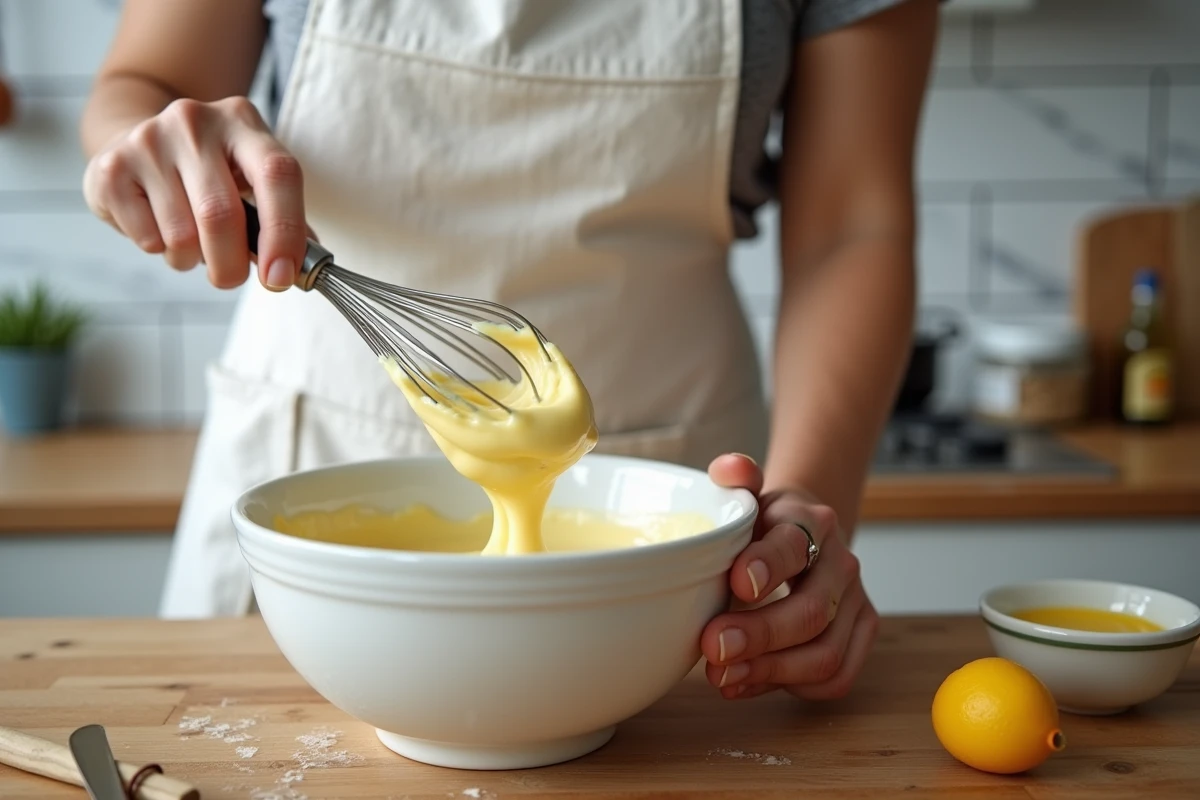
Have you ever seen a mayonnaise refuse to emulsify even though the recipe seemed perfect? The problem often comes from the utensil placed on the countertop. The whisk or mixer you use directly affects the size of the oil droplets dispersed in the egg yolk, and thus the final texture of your sauce. Choosing the right tool is already half the battle solved.
Fine wire whisk in stainless steel: the technical choice for a stable mayonnaise
To understand why one whisk works better than another, we need to look at what happens in the bowl. Mayonnaise is an emulsion: oil droplets suspended in an aqueous phase (vinegar, mustard, egg yolk water). The lecithin in the egg yolk stabilizes these droplets, but it is the whisk that creates them.
Each wire of the whisk that passes through the mixture acts like a shear blade. It cuts the oil droplets into smaller fractions. The finer and more numerous the wires, the smaller the droplets, and the more stable the emulsion. A whisk with thick or spaced wires allows the oil to pass through without fragmenting it sufficiently.
Product tests published by Wirecutter confirm that a whisk with fine and numerous stainless steel wires disperses the oil into more homogeneous droplets than a whisk with thick or silicone-coated wires. Silicone, being softer, absorbs some of the mechanical energy instead of transferring it to the mixture. The result is a less tight, more fragile emulsion.
If you want to know which whisk or mixer for mayonnaise gives the best results, the answer lies in one criterion: favor bare stainless steel with a maximum of tightly packed wires.
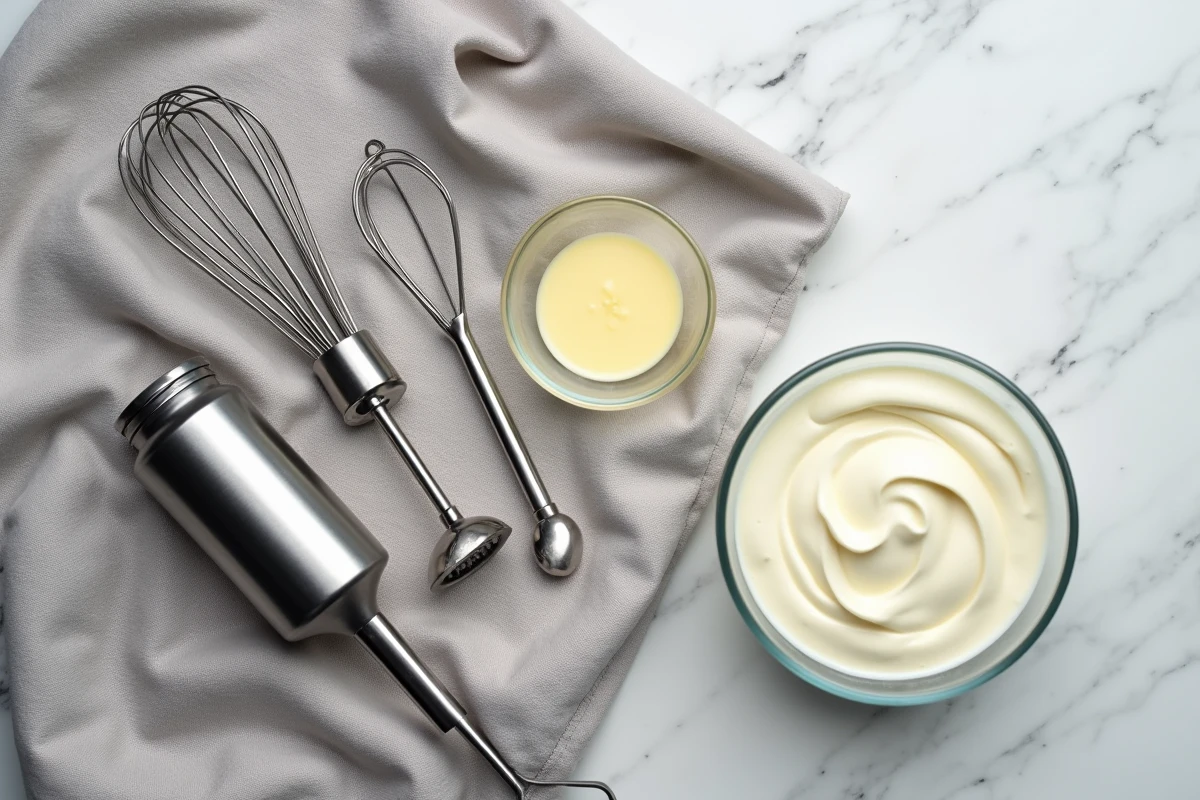
Balloon whisk or flat whisk: light texture or paste-like texture
The two main families of manual whisks do not produce the same mayonnaise. And this is a distinction that few amateur cooks know.
The balloon whisk, wide and very airy, incorporates air into the mixture with every movement. It yields a more voluminous mayonnaise, lighter in the mouth, slightly frothy. This is the classic whisk found in most kitchens.
The flat whisk (sometimes called a sauce whisk or roux whisk) works differently. Its flattened shape hugs the bottom of the container and creates a more intense shear on a reduced volume. The result: finer droplets, a denser texture, close to a paste. Comparative tests conducted by America’s Test Kitchen in 2023 confirm this difference at equivalent whisking speeds.
Do you prefer an airy mayonnaise to accompany raw vegetables? The balloon whisk is suitable. Do you want a firm sauce that holds on a fry without dripping? The flat whisk gives better results.
Electric mixer for mayonnaise: when speed becomes a trap
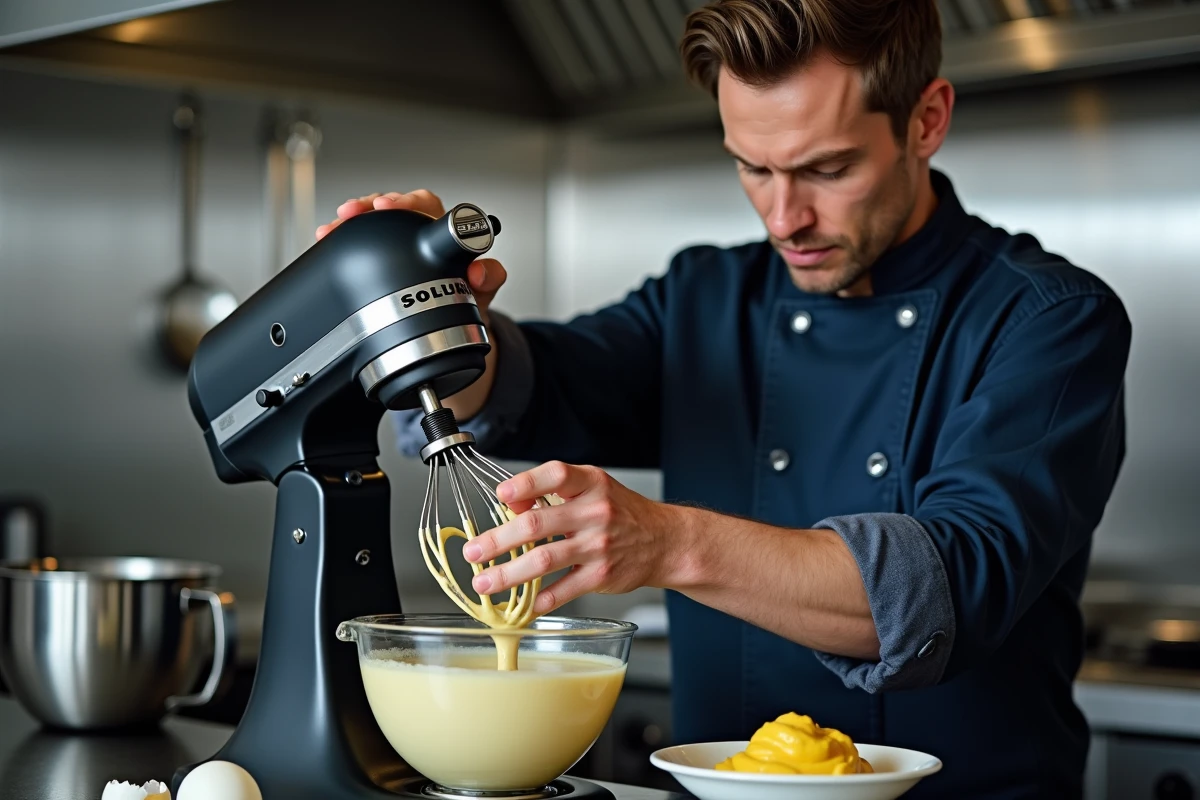
The electric mixer or stand mixer seems like a logical shortcut. In practice, their use requires some precautions that the manual does not mention.
The first problem concerns small quantities. Cook’s Illustrated and Serious Eats have documented a threshold below which the whisk of a mixer does not “catch” the mass. With just one egg yolk and a small volume of oil, the whisk spins in the void and the mayonnaise fails more often than with a manual whisk. For the mixer to work, you need a narrow container or a sufficient amount of base.
The second problem is speed. A mixer that spins too fast heats the mixture through friction. The heat destabilizes the lecithin and causes the emulsion to break. The mayonnaise becomes liquid again.
Here are the points to check if you are using an electric mixer:
- Start at the lowest speed, then gradually increase only when the emulsion has set
- Use a tall and narrow container (like a measuring cup) so that the whisks remain in constant contact with the mass
- Pour the oil in a very fine stream, even more slowly than with a manual whisk, because the mixer disperses faster than it incorporates
- Stop as soon as the texture is firm: every additional second of mixing risks overheating
The manual whisk remains more reliable for mayonnaise with a single egg yolk. The mixer takes over when you prepare large quantities, starting from three or four yolks.
Whisk material and maintenance: a criterion that affects taste
A stainless steel whisk does not impart any taste to the mixture. An uncoated aluminum whisk can leave a metallic aftertaste when in contact with vinegar or lemon, which are acidic. This detail goes unnoticed in a pancake batter, but in a raw sauce like mayonnaise, it is noticeable.
The silicone that coats some whisks poses another problem. It retains fats in its micro-pores after washing. If your whisk still smells of oil after going through the dishwasher, these fat residues can interfere with the next emulsion.
Here are some concrete criteria for choosing a durable whisk suitable for mayonnaise:
- 18/10 stainless steel (the standard in professional kitchens), resistant to acids and without taste transfer
- Welded handle-wire junction, not crimped, to avoid the accumulation of food residues
- Handle not coated with soft plastic, which eventually cracks and harbors bacteria
A good quality stainless steel whisk lasts for years without altering the taste or stability of your emulsions.
The success of a mayonnaise depends on three variables: the freshness of the egg yolk, the temperature of the ingredients, and the shearing tool. On the first two, most recipes provide good advice. On the third, a stainless steel whisk with fine tightly packed wires solves more failed mayonnaises than any grandmother’s trick.