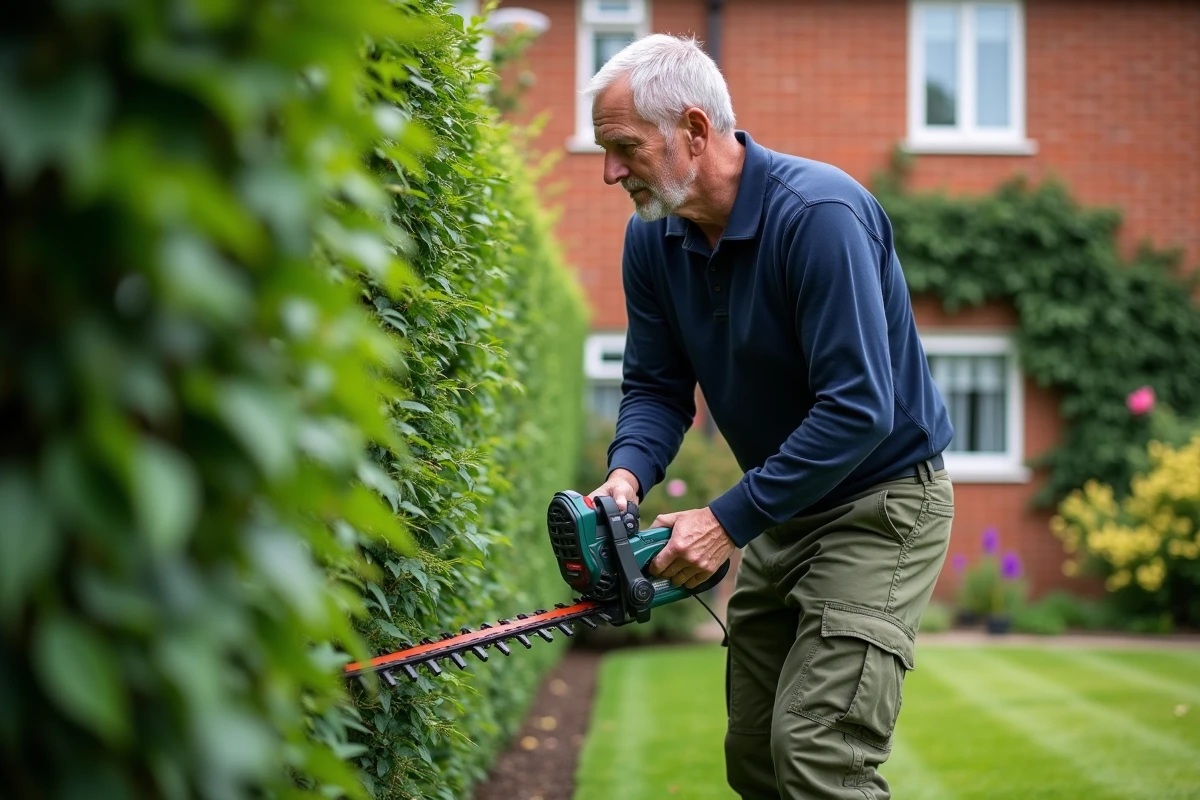
Your privet hedge is overflowing onto the sidewalk, and manual shears are no longer sufficient. An electric hedge trimmer seems like the logical solution, but the tool aisle features dozens of models with nearly identical technical specifications. The real starting point for choosing a suitable electric hedge trimmer isn’t the power listed on the box; it’s what you actually do in your garden.
Light finish, thick cut, or versatility: identifying your use above all
Do you trim a boxwood hedge twice a year to maintain a neat line? Or are you tackling a wild hedge with branches that exceed one centimeter in diameter? These two situations require different tools.
For a regular finish on fine shoots, a basic wired model performs its job perfectly. The motor doesn’t need to deliver high power, and the weight remains manageable, making it easier to work for extended periods along a straight hedge.
When branches become tougher (cherry laurel, hornbeam, vigorous photinia), a wider tooth spacing and a motor capable of maintaining its pace without straining are necessary. This is where the distinction between models really comes into play, much more than a large wattage number displayed on the packaging.
Third case: you already own a brush cutter or blower from the same battery range. Some manufacturers offer multi-tool kits sharing the same battery, which reduces the overall budget and simplifies storage. If you’re comparing models on taille-haie-electrique.com, be sure to check compatibility with an existing battery ecosystem before focusing on isolated features.
Blade length and type: the criterion beginners overlook
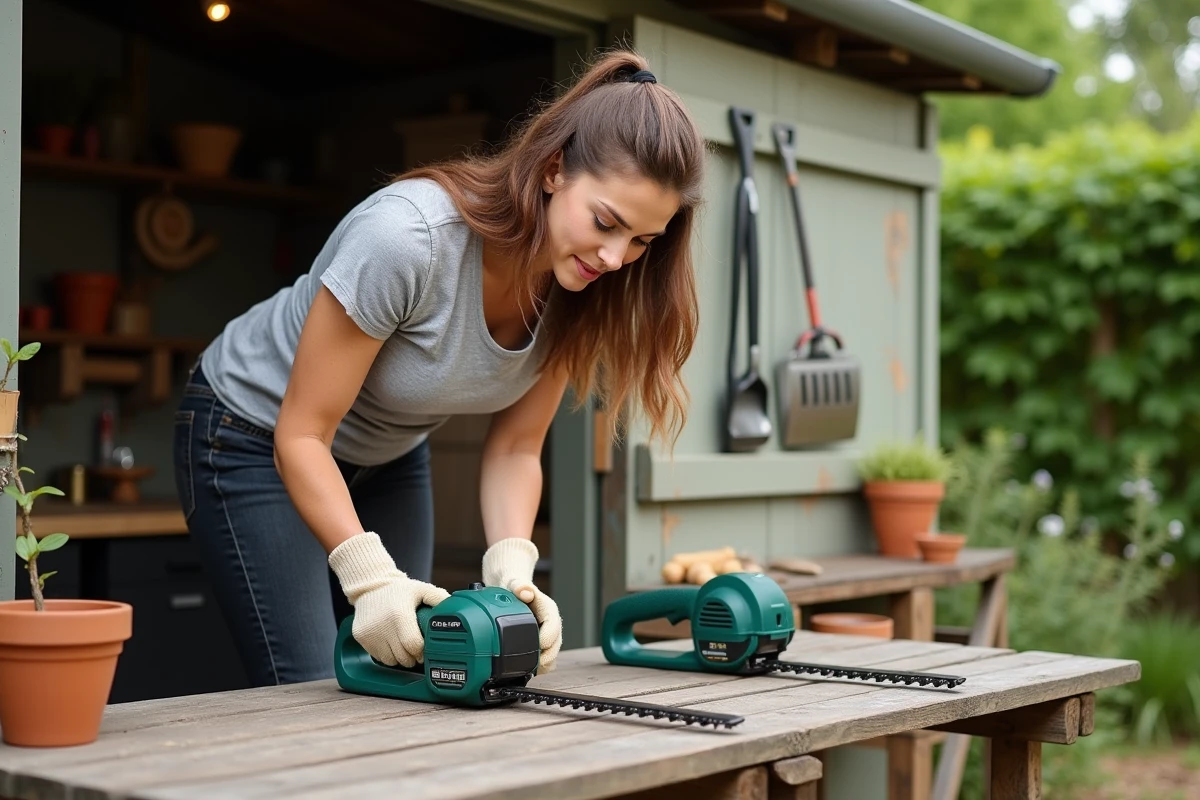
The blade is what makes the cut. Two parameters matter: its length and its mode of operation (single or double action).
Short or long blade, what concrete impact
A short blade (around 40-45 cm) offers more maneuverability. It’s suitable for sculpting shapes, trimming isolated shrubs, or working in a confined space. A long blade (60 cm and more) covers more surface area with each pass, speeding up work on a linear hedge several meters long.
Choose the blade length based on the width of the hedge, not its height. If your hedge is less than 50 cm deep, a short blade is more than sufficient. Beyond that, a longer blade prevents the need to trim from both sides.
Single action or double action
On a single action blade, only one row of teeth moves. The vibration is more pronounced. On a double action blade, both rows of teeth move in opposite directions. The result: less vibration transmitted to the arms and a cleaner cut.
- Single action blade: suitable for occasional use and small budgets, but more tiring during long sessions.
- Double action blade: preferable as soon as you’re trimming more than a few linear meters, as the reduction in vibrations protects the joints over time.
- Laser-cut or diamond-cut blade: a surface treatment that prolongs sharpness, interesting if you don’t want to sharpen frequently.
Wired or battery: the weight of freedom of movement
Recent content from amateur gardeners shows a clear trend: maneuverability and lightness take precedence over raw power in selection criteria. A lightweight, easy-to-direct device yields a cleaner result than a powerful but difficult-to-handle model.
The wired hedge trimmer remains plugged into an outlet. It never runs out of battery, and its weight is generally less than that of an equivalent cordless model. The constraint is the cord: beyond ten meters, an extension is needed, and there’s a risk of cutting the wire.
A cordless model frees up movement and allows you to work far from the house. The autonomy depends on the battery capacity and the intensity of the cut. For a modest-sized hedge, a single charge is usually sufficient. For a large garden, it’s better to have a spare battery or check the recharge time.
Maneuverability and safety: two criteria linked to real comfort
Have you ever held a gardening tool at arm’s length for twenty minutes? The weight of the electric hedge trimmer directly affects the quality of the cut. A tool that’s too heavy leads to imprecise movements, uneven hedges, and shoulder pain.
Several elements influence user comfort:
- The rotating or pivoting handle, which allows switching from horizontal to vertical cutting without changing body position.
- The integrated anti-vibration system, distinct from the type of blade, which absorbs shocks transmitted by the motor.
- The hand guard and blade brake, present on most recent models, which stop the teeth in a fraction of a second when the trigger is released.
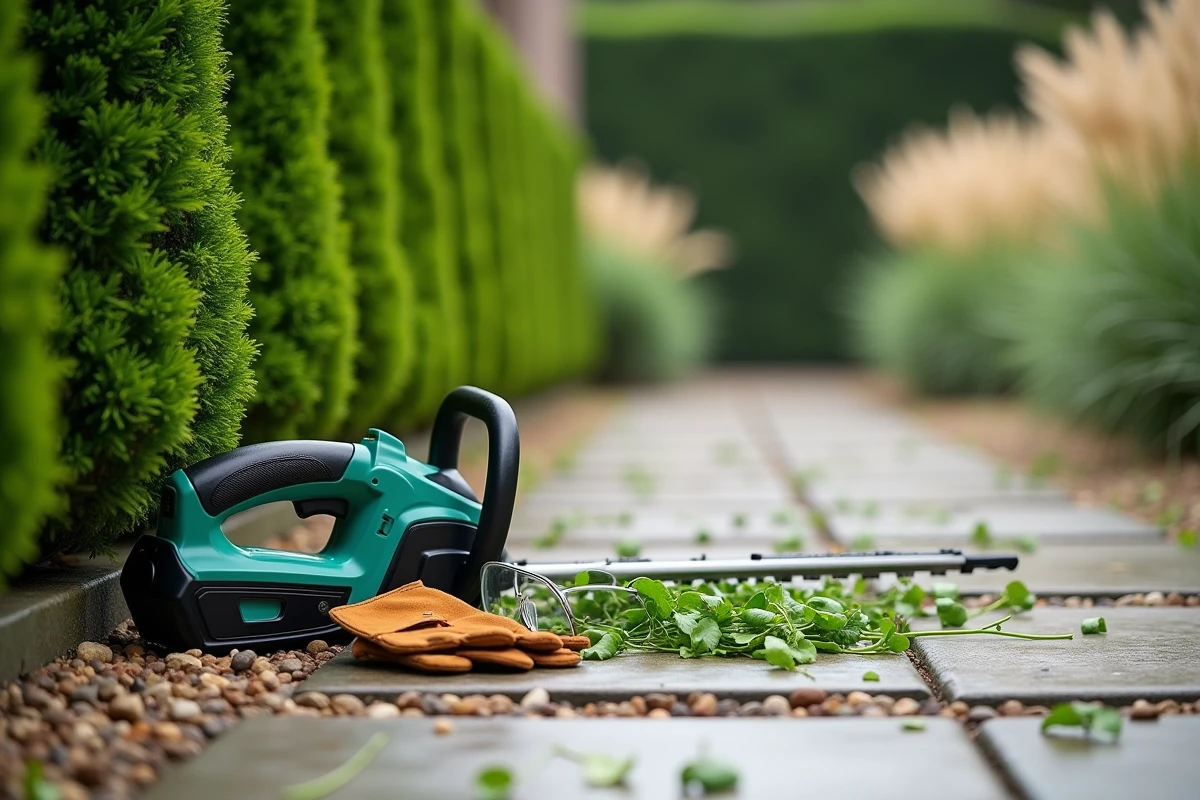
Some brands now include complete safety kits (gloves, glasses) directly in the packaging. This detail, often seen as an accessory, reflects an evolution: personal protection is part of the product, not a separate purchase.
Test before buying: renting as a selection step
Buying a hedge trimmer without having handled it is a gamble. The trend towards renting gardening equipment is growing, and it has a concrete benefit for choosing an electric hedge trimmer. Renting a wired model and then a battery model over two different weekends allows you to compare handling, actual autonomy, and cutting results on your own hedge.
A real-world trial is worth more than ten technical sheets. The perceived weight, noise, balance of the device, and ease of cleaning after use: these elements are not listed on any label.
Whether you opt for a basic wired model or a cordless device integrated into a battery ecosystem, the right hedge trimmer is the one that matches the hedge you have, not your neighbor’s. Take the time to define the trimming frequency, branch diameter, and distance to the power source before comparing product sheets.